

They say that the eyes are the window to your soul. At least, that is what they say, and perhaps there is some truth in it.
But how much can we actually trust what we see?
Our eyes are what connect our minds with the world. With them, we see the world, and the image we receive is then interpreted by our minds and given meaning. This is important because what we actually see is not necessarily the same as what we think we see. So, what is the truth? Is it simply a subjective experience, different for everyone who receives an image and interprets it in their own way?
We can even be blind in front of our own eyes.
There is a famous experiment conducted by psychologist and professor Daniel Simons, together with Christopher Chabris, which demonstrates exactly how limited our attention can be. In the experiment, people were asked to count how many basketball passes one team made. While they were concentrating on this task, a person in a gorilla costume walked directly across the screen. And many of the participants simply did not see it. The gorilla was directly in front of their eyes, yet they were literally blind to it because their attention was focused somewhere else. This phenomenon is known as inattentional blindness.
And how do we know that a person is deeply focused on something? Even our pupils can give us clues. When we are highly engaged or focused, our pupils can change in size. And how do we know that a man is attracted to the woman standing in front of him? Again, we can look at his pupils. Of course, we can also take into account other accompanying reactions, such as faster breathing, a stronger heartbeat, or potential sweating while trying to approach that fatal woman. But all of these reactions could also be reactions to a heart attack, so perhaps the pupils still tell us something about the desire burning inside him.
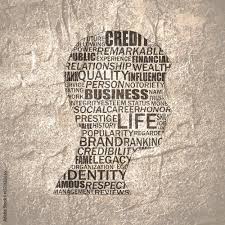
Reputation
Therefore, if we can be blind even with our own eyes, and if what we see is influenced by what we are paying attention to, what we already expect, and the meaning our minds give to it, how is it that REPUTATION has such a great meaning for us?
Shouldn’t reputation, in that case, mean almost nothing?
After all, at the end of the day, some people will always like us, while others will not. Some choose to stay with us throughout our entire life, while others leave and look for something “better”.
We can all agree that there is no better, only different.
But let them search for better.
So why, then, does this REPUTATION turn us into victims of ourselves?
When does a girl or a boy actually stop being themselves and become part of a story about reputation?
When does the person behind the reputation disappear?
And when does that fire in their eyes slowly begin to fade and eventually get lost?
Do we really lose it forever?
Maybe someone catches the flame and brings it back.
But wouldn’t it be better if fewer people had to lose anything at all?
Maybe they could simply remain those satisfied and happy children they once were, without feeling that they have to become what they think is good enough to have their own reputation.
Because perhaps the strangest thing about reputation is that, while trying to protect how other people see us, we can eventually stop seeing ourselves.
References
Simons, D. J., & Chabris, C. F. (1999). Gorillas in our midst: Sustained inattentional blindness for dynamic events. Perception, 28(9), 1059–1074. https://doi.org/10.1068/p281059