

What my cat, and Stéphane Garnier, taught me about freedom, boundaries, trust and being yourself.
This blog is about the knowledge I took from a book I recently read by Stéphane Garnier, How to Think Like a Cat (also published as How to Live Like Your Cat). And I must say, as a relatively new cat owner with not that much knowledge about cats, this book did much more than simply help me understand cats. It helped me understand how I should actually appreciate my new best friend.
Stéphane Garnier is also a cat owner, and the whole idea of the book came from observing his cat, Ziggy. Instead of looking at his cat as simply a pet, he started looking at him almost as a teacher. He observed how Ziggy lived, behaved, rested, interacted with people and protected his own space, and then asked a very interesting question: What if humans actually learned from cats?
And honestly, I think he might be onto something. There is a quote in the book that I strongly agree with: “We have everything to learn from cats.” Because when you actually start watching a cat, it is almost unbelievable how much they already know.
Cats love themselves.
They know how to behave.
They take their time.
Cats are gentle, but they can also be very clear.
They are smart, but they don’t need to prove that they are smart.
They are careful.
Cats are independent.
They adapt quickly.
They are constantly learning.
Cats know when they need to rest.
They know when they want attention and when they absolutely do not.
And somehow, they seem completely comfortable being exactly who they are. They don’t spend their entire lives asking themselves whether someone else approves of them, and for sure cats don’t compare themselves with the cat next door. Cats don’t wake up thinking, “What should I do today so that everyone likes me?”
They just… live.
And that is probably one of the biggest things humans spend their entire lives trying to learn.
Cats don’t apologise for being cats
One thing that really stayed with me from the book is the way Garnier describes cats as naturally free. Cats don’t seem to understand why they should do something simply because somebody else wants them to.
Try telling a cat where to sit, or when it should sleep. Try telling a cat that it has to like someone.
Good luck.
Cats have boundaries. And they communicate them. If they want affection, they come to you, but if they don’t, they walk away. You cross their boundary, they let you know.
There is something incredibly healthy about that.
The book talks about cats being free to choose what they do, what they enjoy and who they spend time with. Garnier even describes freedom as being at the heart of a cat’s life. And maybe humans could use a little more of that. Not in the sense of becoming selfish or irresponsible. But in the sense of asking ourselves:
Do I actually want this?
Does this relationship make me feel good?
Do I agree with this, or am I just doing it because someone expects me to?
Am I following my own values, or somebody else’s rules?
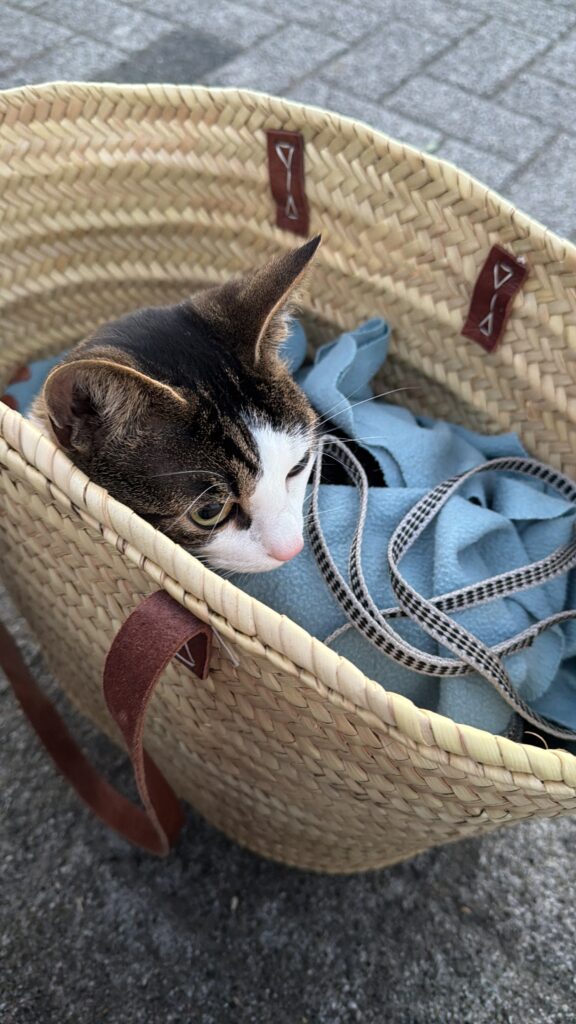
What my cat Rocky taught me about relationships?
Recently, I exited a friendship. And one of the main things I learned from people I left was that, apparently, I am not their cup of tea. At first, this made me question myself.
One of my friends told me that I am doing everything I want, that I don’t care and that I don’t follow some rules only she thinks I should follow. And after hearing that, I started asking myself:
What does that actually mean?
Am I a bad person? Or, am I incapable of being a good friend?
Am I selfish?
And what if I am doing something wrong?
But then I started thinking about my Rocky and the book I’ve just read. A cat doesn’t spend its entire life trying to convince another cat that it is worthy of friendship. It doesn’t follow a list of rules created by another cat in order to keep the relationship alive. It doesn’t give up its entire personality to make someone else comfortable. And I think above all Rocky does not do that.
And maybe humans shouldn’t either. Relationships are two-way highways. Trust is also two-way. And yes, trust is difficult. You can get hurt when you trust someone. But if there is no trust, what exactly is the relationship built on?
Fear?
Control?
Rules?
Constant reassurance?
That doesn’t sound like friendship to me. Someone not trusting you is not automatically proof that you are untrustworthy. Sometimes, it is simply their difficulty with trust. And I think this is where cats have something very interesting to teach us. This is also something I learned from him by going through many challenging situation I talked in my previous blog.
A cat doesn’t need rules to be loyal
Cats are independent, but that doesn’t mean they are incapable of love. Actually, this is one of the things I find most beautiful about them. You don’t need to control your cat in order to stay close to you.
They choose you, and will come back to you.
They sit beside you, and sometimes they also sleep next to you. But sometimes they completely ignore you for hours and then suddenly decide that your lap is the most important place in the world. And somehow, we still accept this.
Why?
Because we understand that their affection means more when it is freely given.
The book talks about cats choosing their own company and not wasting energy on relationships that don’t serve their wellbeing. That doesn’t mean cats are incapable of affection or loyalty, it means that their connection is not based on forced obedience. And they indeed understand know that love is equal to freedom.
Maybe, hopefully humans could learn the same distinctions.
Love without freedom becomes control.
Friendship without trust becomes surveillance.
Boundaries without respect become rules.
And rules created only to control another person are not the same thing as morals. I believe morals should come from your internal guidance. From knowing what is right and wrong even when nobody is watching.
Cats don’t need someone standing behind them telling them how to behave every second.
They have instincts, they can observe and learn. Cats are adjustable and most importantly they act.
Maybe we should do a little more of that ourselves.
Maybe cats already know the answer
Since working on myself and with my therapist, I have learned so much about boundaries, self-worth, trust, independence and listening to my intuition. And then I look at Rocky and think:
He already knows all of this.
Maybe if we all decided to study cats, we could have free therapy sessions. Cats know how to be alone without being lonely and how to be close without losing themselves. They know when to say no, when to rest, when to explore and when to simply enjoy the moment. For sure cats don’t compare themselves with others, and trying to become someone else is just on their to do list. They simply know who they are.
And maybe that is what we humans spend our entire lives trying to learn.
So don’t allow yourself to be pushed into becoming someone else just because somebody else cannot trust themselves, and therefore cannot trust you. Live your life with the best capabilities you have. Keep learning. Search for more than you think you deserve. Stay humble, but have your dignity. Stay smart, but be kind. Follow your instincts and go on new adventures.
And when you need to, walk away from people who make your freedom a problem.
Maybe being independent is not selfish, and perhaps having boundaries is not wrong.
What if trusting yourself is not arrogance.
Perhaps we just need to be a little more like cats. And honestly, I think we could all use a little more of that.
Keep your freedom, your curiosity. Keep your dignity. And keep your cat with you. 🐈
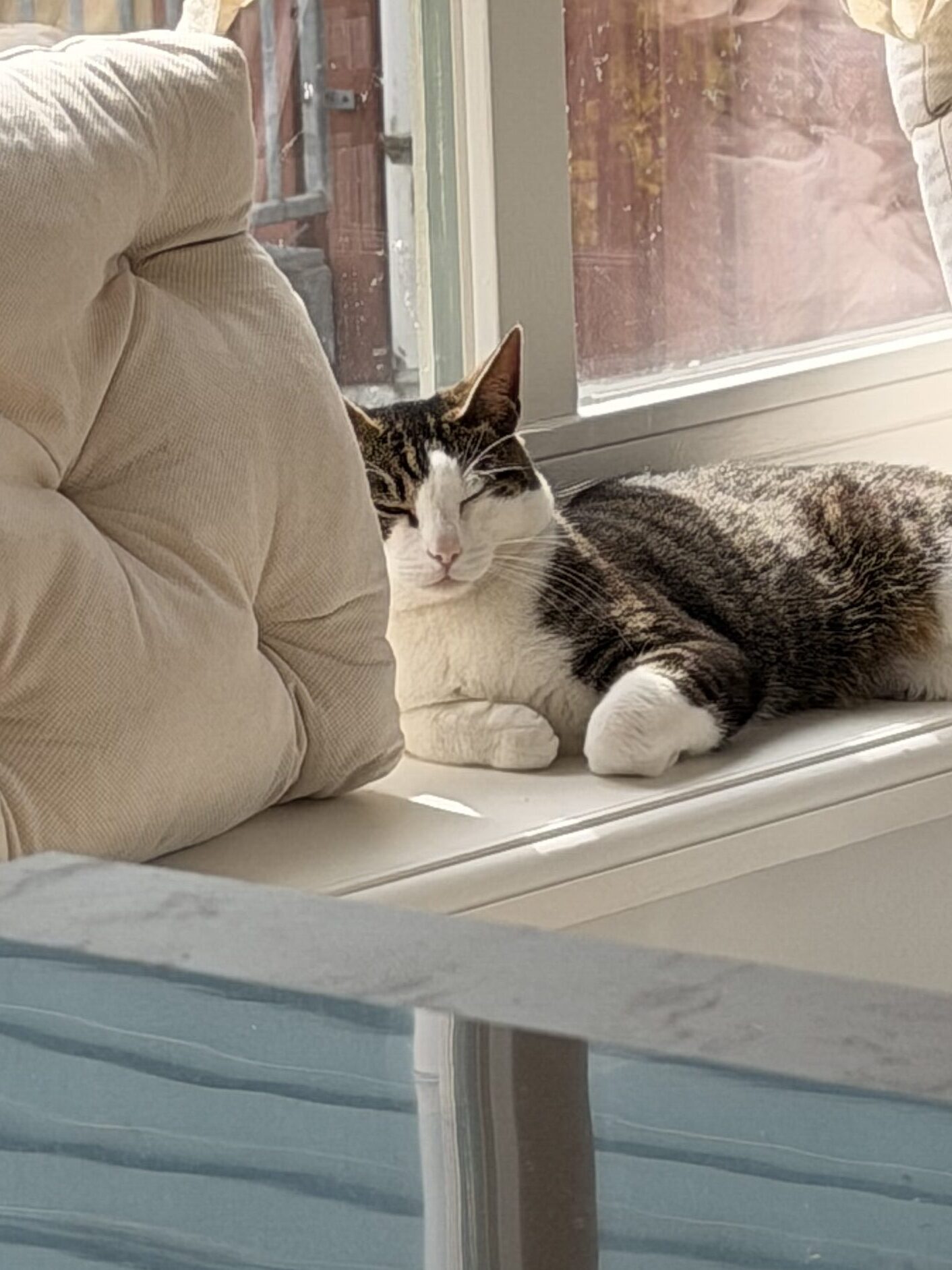
Enjoy in your life <3